

What does Cardio do?
Cardio (or aerobic exercise) refers to exercise that involves or improves oxygen consumption by the body. Aerobic means “with oxygen”, and refers to the use of oxygen in the body’s metabolic or energy-generating process. (Note: For the sake of simplification, I will use the term aerobic and cardiovascular interchangeably).
What Are Cardio Exercises
Many types of exercise are aerobic, and by definition are performed at moderate levels of intensity for extended periods of time. For example, running a long distance at a moderate pace is an aerobic exercise, but sprinting is not. Playing singles tennis, with near-continuous motion, is generally considered aerobic activity, while golf or doubles tennis, with brief bursts of activity punctuated by more frequent breaks, may not be predominantly aerobic. Some sports are thus inherently”aerobic”, while other aerobic exercises, such as aerobic dance classes, are designed specifically to improve aerobic capacity and fitness. Generally speaking, however, cardio/aerobic exercise is any exercise that uses large muscle movement over a sustained period of time keeping your heart rate to at least 50% of its maximum level. To obtain your Target Heart Rate check out this Target Heart Rate Calculator, or use the simple formula below.
Examples of cardio workouts include
- Walking
- Running
- Cycling
- Swimming
- Skipping Rope
- Stair Climbing
- Rowing
- Circuit Training
- Weight Training
What is the Best Type of Cardio For Your Heart?

I like how this Cardiologist in the video answer the question of what is the best cardio workout. Additionally, he recommends a target heart rate for cardio to be 50-80% of your age rated maximum heart rate. Where you age rated maximum heart rate = 220 – (You Age).
Terminology
Aerobic literally means with oxygen. The Aerobic training zone is the training intensity where you are burning fuel with oxygen. Long, low-intensity sports like jogging, walking, marathons are aerobic. Aerobic exercises use lipids (fats) with oxygen for energy. Anaerobic exercise uses ATP-PC or glycolysis (carbs) for energy. That’s one of the reasons you need to eat carbs. Anaerobic means without oxygen. The Anaerobic training zone is the training intensity where you are burning fuel without oxygen. Short, high-intensity sports like weight lifting, sprints are anaerobic.
Cardiovascular System. Your cardiovascular system is composed of your heart, blood & blood vessels.
High-impact Aerobics – meaning that both feet regularly lose contact with the floor, as with running, jumping and hopping.
Low-impact, meaning that at least one foot retains contact with the floor throughout the workout session.
Target Heart Rate (HR). Your target heart rate is the range of heartbeats per minute at which you should work in order to best achieve aerobic fitness. Maximum Heart Rate. Your maximum heart rate (HR max) is the theoretical number of beats per minute that your heart is capable of producing.

Aerobic / Cardio history both the term and the specific exercise method were developed by Kenneth H. Cooper, M.D., an exercise physiologist, and Col. Pauline Potts, a physical therapist, working at the San Antonio Air Force Hospital in Texas. Cooper, an avowed exercise enthusiast, was personally and professionally puzzled about why some people with excellent muscular strength were still prone to poor performance at tasks such as long-distance running, swimming, and bicycling. He began measuring systematic human performance using a bicycle ergometer and began measuring sustained performance in terms of the ability to utilize oxygen.
Cooper’s groundbreaking book, Aerobics, was published in 1968 and became a best seller. Cooper’s data provided the scientific baseline for almost all modern aerobics programs, most of which are based on oxygen-consumption equivalency.
How To Make Cardio Training Effective
Generally, cardio training involves exercising for 30 – 45 minutes at a continuous pace, or intensity… Continuity is a key feature of cardio training, and hence this makes cardio training completely different from weight training, which is intermittent in nature, involving stops and starts. Workouts should cause moderate sweating. If you can’t finish a sentence while doing your workout you are going at it too hard. If you are having no trouble talking step it up.
You need a minimum of 20 minutes of a continued elevated pulse to get the best results at least 3 times a week. The American College of Sports Medicine recommends 30 minutes of moderate intensity physical activity most days of the week.
Cardiovascular or Aerobic Training Primary Purpose
The No. 1 benefit of following an aerobic exercise plan is the change in your cardiovascular fitness that results from this kind of training regimen. Cardiovascular or Aerobic Training is aimed at improving your heart muscle and cardiovascular system. Your heart is a muscle. Like any muscle, it becomes stronger with exercise and can pump blood more efficiently. Regular aerobic exercise causes your lungs to process more oxygen with less effort; your heart to pump more blood with fewer beats, and the blood supply directed to your muscles to increase. As a result, by performing cardiovascular exercises, you are increasing your body’s endurance and efficiency. At the same time, exercise also improves the performance of the muscles in the rest of your body. Research shows that the specific benefits of regular low impact aerobic exercise.
29 Benefits of Low Impact Aerobic Exercise
- Strengthens your heart
- Lowers risk of heart disease (including but not limited to heart attack, arteriosclerosis, atherosclerosis, Ischemic cardiomyopathy, Hypertensive cardiomyopathy, Inflammatory heart disease, etc.).
- Reduces cardiovascular risk factors such as high blood pressure, diabetes and high cholesterol. Exercise is an important factor in preventing cardiovascular disease. Frequent exercise leads to the physiological remodeling (change) and hypertrophy (beneficial enlargement) of the heart. This type of hypertrophy is different from pathological hypertrophy (an abnormal enlargement that leads to problems such as heart failure).
- Disease reduction. Extra weight is a contributing factor to conditions such as heart disease, high blood pressure, stroke, Type 2 diabetes(adult-onset diabetes) and some forms of cancer. As you lose weight, your risk of developing these diseases decreases.
- Relieves or decreases the symptoms of angina.
- Stops or reverses the build-up of blockages in the vessels that supply blood to the heart.
- Helps control blood sugar.
- Helps reduce the risk of developing insulin sensitivity and Type 2 diabetes.
- Can help keep you fit if you have arthritis, without putting excessive stress on your joints.
- Strengthens heart and lungs.
- Increased stamina/endurance. Exercise may make you tired in the short term,i.e., during and right after the activity, but over the long term, it will increase your stamina and reduce fatigue.
- Improves the ability of muscles to use fats during exercise, preserving intramuscular glycogen.
- Increases the total number of red blood cells in the body, facilitating the transport of oxygen.
- Improves circulation efficiency and reducing blood pressure.
- Increases bone density. Lowers risk of osteoporosis.
- Promotes weight loss through calories burning and increased metabolism.
- Helps maintain a healthy weight.
- Reduces body fat.
- Increases your metabolic rate. The metabolic activity of an individual is heightened for several hours following a bout of aerobic activity.
- Improves immune system. People who exercise regularly are less susceptible to minor viral illnesses such as colds and flu. It is possible that aerobic exercise helps activate your immune system and prepares it to fight off infection.
- Improved muscle health. Aerobic exercise stimulates the growth of tiny blood vessels (capillaries) in your muscles. This helps your body more efficiently deliver oxygen to your muscles and remove from them irritating metabolic waste products such as lactic acid.
- Tone muscles throughout the body.
- Enhances the speed at which muscles recover from high-intensity exercise.
- Helps prevent osteoporosis (gradual loss of bone mass/strength).
- Improves mobility and strength in later life.
- Reduces stress. Regular aerobic exercise releases endorphins, your body natural painkillers. Endorphins also reduce stress, depression, and anxiety.
- Improves sleep patterns.
- Increases lifespan. Several studies published in the New England Journal of Medicine scientifically linked exercise with increased life spans for the first time. A famous study looked at 17,000 male alumni of Harvard University between the ages of 35 and 74. Results show that the physical activities of the men increased, their death rate decreased. Men who spend at least 2,000 kilocalories per week doing moderate exercises such as tennis, swimming, jogging or brisk walking lowered their overall death rate by 25-33% and decreased their risk of coronary artery disease by an astounding 41% when compared to the more inactive fellow alumni.
- Improves the quality of life. Less chronic muscle pain, less stiffness, and greater mobility are all benefits of exercising.
What a Doctor Says About The Benefits fo Aerobic Exercise
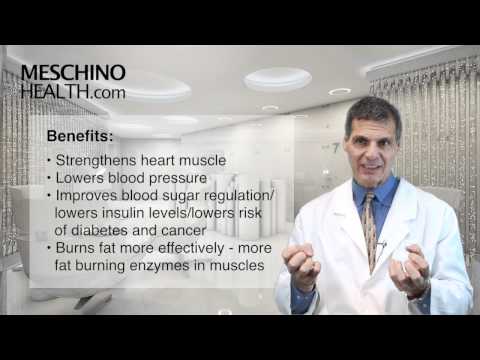
This second video brings to light one of the challenging things when it comes to doctors opinions and recommendations, they don’t always agree. Here Dr. Meschino recommends 60-85% of your maximum heart rate as the target heart rate. Before the target was 50%-80%, so which one is better, we can’t tell, but they both agree that 60-80% of your maximum heart rate is good.
Which Type of Cardio Should I Do?
Cardiovascular training, no matter what the exercise, is categorized based on duration and intensity. When you are choosing which type of cardio to do, keep your goals in mind.
Regardless of what cardiovascular activities that you do, the following guidelines should form guide you on what form of exercise to do.
- Does the cardiovascular exercise offer a sustained repetitive movement using large muscle groups such as your legs?
- Does your activity allow you to continually be active for 30-45 minutes?
- Are you able to maintain an intensity of 60-85% of your maximum heart rate?
- Can you continue to pursue this activity 3-5 days a week in order to obtain significant benefits?
If your goal is to improve your general cardiovascular fitness, do moderate intensity work where you are starting to breathe deeply and you can feel that you are working.
When your goal is a fat loss but you’re in poor shape, do low intensity, long duration work such as walking.
If you want fat loss and you’re in reasonably good cardiovascular shape, do the type that burns the most calories, i.e. high-intensity training (greater than 70% of your target heart rate).
Expensive Gyms Not Required
Cardiovascular training or aerobic training may be accomplished in several ways where you don’t need to spend any money or belong to an expensive gym. Walking, jogging, skipping rope, boxing, dancing, riding a bike – any of these qualify as aerobic exercise
Health Clubs
Modern health clubs provide a variety of machines to perform cardio. You now have the choice of exercising in air-conditioned comfort, away from any distractions, using scientifically designed machines that reduce the impact on your joints. Also, interactions with other members and encouragement from fitness trainers can make a big difference. For example, a stepper or stair climber simulates stair climbing. Stationary bicycles simulate cycling. A treadmill is a machine that simulates walking. Many health clubs also offer other specialized devices like elliptical trainers and rowing machines.
Maximum Heart Rate (MHR)
From an anti-aging perspective, our goal with regards to cardiovascular exercise is to monitor the optimal point at which our heart is doing maximum work.
Because of age-related deterioration of the heart muscles, a young person’s maximum heart rate is different from that of an older individual. Fortunately, the targeted heart rate is a relatively easy number to calculate based on the formula of 220 minus your age. Therefore, if you are 30 years old, your maximum target heart rate should be 220-30=190. In other words, this is the maximum heart rate that you should not exceed, regardless of what form of exercise you take. This is simply an estimation, not an absolute limit.
Monitor Your Heart Rate
From a health perspective, you want the heart to be stressed but yet at the same time not over-stressed. Over-stressing the heart has certain advantages and disadvantages. If you are young and training for a competitive event, it is not unusual for the heart to be stressed to the maximum, especially during integral training, stressing the heart at maximum target heart rate would allow peak performance especially in a sprint-type event where a powerful burst of energy is required.
To measure aerobic exercise intensity, percentage of HR max (%HR max) is often used. If you want to exercise at 60% of your HR max, your heart rate should be, using the example above, around 108 beats per minute. Your heart rate is your guide for cardiovascular exercise intensity.
Intensity (Target Heart Rate)
The target heart rate is the range of heartbeats per minute at which you should work in order to best achieve aerobic fitness. YourTarget Heart Rate is used to gauge intensity. The intensity of an activity can vary. Most health and fitness experts are in agreement that between 60% and 80% of one’s maximum heart rate is a good, reliable index of intensity. The bottom end of the scale is best for low-intensity training while the top end is for high-intensity training.
So, using the maximum heart rate example. If you are 30 years old, then your maximum heart rate is 220-30=190 beats per minute. If you take 70%of this then you arrive at 133, 80% of 170 equals 152. Therefore if you exercise in anaerobic capacity, which enhances your cardiovascular fitness, your exercise target heart rate should be between 133 and 152. This is, of course, a very general formula and does not apply to those who are training for competitive sports. As your cardio-fitness increases, your ability to train closer to your maximum cardiac heart rate level will also be improved automatically.
Taking Your Heart Rate
An electronic heart rate monitor that is strapped to your chest or on a watch can also be used to keep track of your heart rate (the chest strap style is usually more accurate, being much closer to your heart).
There are also some cardio machines that have touch sensitive pads on the handlebars that can take your pulse by counting the electrical signals of your heartbeat. These are typically not very accurate but then can give you an “idea” or baseline to gauge your intensity. Make sure the pads are clean and dry and grip them firmly.
Taking Your Heart Rate (manually)
The first is on the inside of the wrist below your thumb. Use your forefinger and middle finger to feel the pulse (this is known as palpation).
The second site is on the carotid artery on the neck (either side). Place your fingers on the side of your windpipe, just below the jaw.
Count the beats for 10 seconds then multiply by six to get beats per minute. This count can last for 10 seconds, 15 seconds, 20 seconds, 30seconds or a full minute. Multiply by 6, 4, 3, and 2 respectively to get beats per minute.
How Much Cardio is Needed?
The answer to this will depend on your goals. If you lead a fairly inactive or sedentary life, any increase in aerobic activity is good for you. Typically for most people, in order to gain the benefits of cardiovascular training, one must do this sustained activity of the large muscle groups for a minimum of twenty to thirty minutes at least three times per week.
Studies show that a brisk walk for even one to two hours a week (30 minutes a day) reduces your risk of having a heart attack or stroke, developing diabetes, or premature death. The U.S. Surgeon General, along with theCenters for Disease Control and Prevention and the American College of Sports Medicine, recommend getting a minimum of 30 minutes of moderate-intensity physical activity on most days of the week.
How Hard Should You Train?
For health purposes, the goal is to keep the heart in a healthy condition but not to over-stress the cardio muscles. For that reason, you should adjust your exercise in such a way that your heart rate is no more than between 60-80% of your maximum heart rate. At this level, 85% of your calories burnt are fat, 5% is protein and 10% are carbohydrates. If you are training at 70-80% of your maximum heart rate, you are increasing your endurance capacity. In this zone, your functional capacity will greatly improve and you can expect to increase the number and size of the blood vessels, as well as an increase in aerobic capacity and respiratory rate. At this level, 50% of your calories burnt are from carbohydrates and 50% are from fat and less than 1% is from protein.
If you are training at 80-90% of your heart rate, then you have entered into another zone. In this zone, the exercise intensity is high, more calories are burnt. 85% of the calories burnt are from carbohydrates,15% from fat and less than 1% is from protein. For anti-aging purposes, it is not recommended that you enter into this zone for a prolonged period of time. A burst of exercise within this zone just to stimulate the heart and to challenge the heart to meet adverse conditions on an intermittent basis is acceptable, however.
Don’t Train Too Hard
Training at 90% -100% of your maximum heart rate is not recommended for anti-aging purposes or fat reduction purposes. In this zone, the highest number of calories are burnt and the lowest percentage of fat calories. Almost 90% of calories burnt here are carbohydrates, only 10%are fat and less than 1% are protein. Very few people can last within this zone for more than a few minutes. Additionally, intensive and strenuous exercising increases cell metabolism, which causes an increase in the production of oxidized products known as free radical. Free radicals are damaging to the cells and are a leading cause of aging and age-related diseases.
As a general guideline, if your goal is to look good and increase your level of health exercise “moderately” at 50 – 70 % of one’s capacity for 30 – 45 minutes, 3-5 days a week, for best results. This is generally the pace at which one gets slightly out of breath. One way to gauge moderate activity is with the “talk test” – exercising hard enough to break a sweat but not so hard you can’t comfortably carry on a conversation.
How to Train if You are Just Starting Out
Brisk walking is an ideal moderate-intensity activity. For the average person, a brisk walk means walking 3-4 miles an hour, or about as fast as you’d walk if you were late for a meeting. Start conservatively if you are just starting training, e.g. three times per week, 20 minutes per session.
Working Out Safely
To safely undergo an aerobic exercise program, it is necessary to include at least 3 phases: warm up, work out, and cool down. Each phase has a particular purpose.
The warm-up phase usually includes stretching and breathing exercises. This may last 5-10 minutes with the purpose of increasing the body temperature, loosening the joints and legs to prevent any undo strain or soreness. A slight elevation of heart rate is also a benefit of the warm-up phase and gets the heart muscles ready for the work out phase. You should be at 50-60% of your target heart rate during this phase.
Warm-up, Workout, Cooldown
The main portion of your workout should last from 15-50 minutes. As discussed earlier this should be performed at 50 – 70 % of your max heart rate. The final phase of your workout should be a cool down phase that lasts from 5-10 minutes. The cooldown phase is designed to bring the physiological system back to its resting level at a gradual pace. This gradual cool down gives the heart time to get used to the decrease in blood flow and a decrease in oxygenation and gives it time to rest. Slow walking is cooling down exercise.
Measuring Progress and Performance
If improving your appearance is your primary motivation for cardiovascular exercise other than anti-aging, then your mirror is your best gauge. The scale, unfortunately, is not a good indicator because we could be gaining muscles and losing fat and that will not show up on the scale. The measurement of a lean body mass, as well as a percentage of body fat, is a good indicator as it gives you a good gauge of how your body composition is changing. Ideally, with a good cardiovascular and weight training exercise, you should be losing fat and gaining lean muscle mass. Your body composition should change accordingly.
Track The Length of Your Workout
You can also measure your progress by the duration and intensity of your cardiovascular exercise routine. If you are able to increase your exercise duration or find that you are making the same progress but with less effort, then your cardiac health is improving. The simplest way is to jog continuously for one mile at a comfortable pace and measure the time it takes. You know you are in excellent cardiac shape if your time is less than 8 minutes. If you can do it within 11-13 minutes, you’ve achieved anti-aging benefits.
Be Encouraged By Your Accomplishments and Feel Better
Ultimately, your progress is best measured by how you feel. When you are consistent in your cardiovascular program, chances are you will feel better, have more energy and a better outlook in life. This may take a few weeks, but it will come. You will realize that your daily tasks have become easier and that the activities and sports you enjoy will not only become easier but also become more enjoyable. Your friends will notice the significant change in you after you have been consistently on the program. Anti-aging is a life-long process and that does not yield immediate results. Many of the benefits will only be apparent years later.
Conclusion
Cardiovascular exercises benefit any age group. The benefits are many, ranging from improved health and well being to anti-aging properties and improved longevity. However, any exercise of aerobic capacity should be structured properly, with physician guidance and should be scale moderately to fit the particular needs and health of each person.