Fitness
Bodybuilding
General Bodybuilding Articles
Diagnosis and Treatment of the Most Common Shoulder and Bicep Injuries in the Gym
| Diagnosis and Treatment of the Most Common Shoulder and Bicep Injuries in the Gym |
|
| Written by Jeff Behar, MS, MBA | |
Injuries to the ShoulderThe shoulder has the greatest range of motion of any joint in the body. The shoulders allow us to put our hands where they need to be. Not only is this important for weightlifters and those who play sports but the shoulder plays a vital part in all of our daily activities. With that being said, the shoulder while also having the greatest range of motion of any joint, it can also be the most unstable. Studies over the past decade show the incidence and prevalence of shoulder injuries among elite weight lifters and power lifters have increased. Shoulder – Labrum TearThe shoulder joint is a ball and socket joint, similar to the hip. The socket of the shoulder joint is extremely shallow, and inherently unstable. To compensate for the shallow socket, the shoulder joint has a cuff of cartilage called a labrum that forms a cup for the end of the arm bone (humerus) to move within and hold the joint in place while allowing a very wide range of movements (more than any other joint in the body). A second function of the labrum is as an attachment of other structures or tissues around the joint such as the ligaments that help hold the joint together. Another structure that attaches to the labrum is the tendon of the biceps muscle. The tendon about the size of a pencil attaches inside the shoulder joint at one end and to a larger tendon, which attaches beyond the elbow in the forearm. The portion, which attaches in the shoulder goes through a small hole in the rotator cuff tendons and once inside the joint the tendon attached in part to the bone near the socket and in part to the labrum at the top of the joint. What are the symptoms of a torn labrum? Symptoms of a labral tear depend on where the tear is located, but may include:
How can a labral tear occur? The labrum can tear for a variety of reasons, such as:
The most common patterns of labral tears are:
How is it diagnosed? Because the labrum is located deep in the shoulder, it is very difficult to make the diagnosis of a torn labrum upon physical examination. The relationship between labrum tears and symptoms has not been totally figured out, so it is not clearly known which ones should be repaired and which ones can be left alone. There are several tests that the surgeon can perform which may indicate a torn labrum, but these tests are not always accurate, especially since labrum tears take different forms as described above. Certain tests may detect one kind of tear but not another. The best tests available to make the diagnosis of a labral tear are magnetic resonance imaging (MRI) or a test called a CT-arthrogram (a CAT scan preceded by an arthrogram where a contrast dye Gadolinium) is injected into the shoulder to highlight tears of normal structures, including labrum tears. Both of these tests are relatively good at defining a labrum tear due to a subluxation or dislocation, but they are only around 80-85% accurate. Neither test is currently very good at making the diagnosis of a SLAP lesion because it is difficult to reliably get good pictures of this area with MRI. The best way to make the diagnosis of labrum tearing is with arthroscopy of the shoulder. Arthroscopic surgery involves the use of a special camera attached to a long, narrow surgical telescope to visualize the inside of a joint. The camera transmits the signal to a video monitor for improved visualization, as well as allowing photographic and video graphic documentation of the surgical findings and the procedure performed. Working through small incisions about the size of dime Small (5mm) in the back, side, and front of the shoulder the surgeon can uses specially created instruments to repair damaged tendon, cartilage, capsule, and other tissues. The three incisions are made so that the arthroscope and instruments may be switched between each of these positions as necessary. Unfortunately this is an operative procedure and requires some form of anesthesia. Making the diagnosis also takes some experience on the part of the surgeon, since the anatomy of the inside of the shoulder can be quite complex. Labrum tears often just part of the problem It is important to understand that labrum tears often occur in conjunction with other shoulder problems such as rotator cuff tears, and even shoulder arthritis. How is a labral tear treated? The treatment of a torn labrum depends on the type of tear that has occurred (SLAP, Posterior, Bankart, etc.). Generally speaking treatment that are often used in cases of a labrum tear include: The treatment of a torn labrum depends on the type of tear that has occurred (SLAP, Posterior, Bankart, etc.). Generally speaking treatment that are often used in cases of a labrum tear include:
Anti-inflammatory medications are particularly useful not only because they help decrease pain, but they also help control swelling and inflammation. NSAIDs are available both over-the-counter and as a prescription, while steroidal ant--inflammatory drugs are available by prescription. The length of treatment, the choice of anti-inflammatory and the success of the treatment will vary from person to person. All medications have side effects, and the most common side effect from NSAIDS is stomach or gastrointestinal upset. Therefore, NSAIDS should be taken with food, and discontinued if abdominal pain persists. Other common side effects may include nausea, vomiting, diarrhea, constipation, decreased appetite, dizziness, rashes, headache, and drowsiness. Another side effect of NSAIDS is interfering in the normal blood clotting mechanism. NSAIDs can cause ulcers in the stomach and promote bleeding. Patients on chronic NSAID use may notice easy bruisability, bleeding gums, or other signs of 'thinned blood'. NSAIDs may also cause fluid retention, leading to edema. The most serious side effects are kidney failure, and liver failure.When taking NSAIDs, it is important to realize that people may respond differently to medication. It is difficult to predict which medications will most benefit a given individual. Therefore the best way to determine which NSAID is best for you is to try different options. If adequate relief of symptoms is not obtained within several weeks of treatment, your surgeon should prescribe a different NSAID. Newer NSAIDs Hit the MarketThere are several new NSAIDS (the so-called COX-2 inhibitors) on the market. There has been no study showing that newer NSAIDs treat pain or swelling any better than more traditional NSAID medications such as aspirin and ibuprofen. One of the best reasons to consider some of the newer medications, however such as Celebrex, is that these may be taken as once-a-day doses rather than three or four times daily, and the COX-2 inhibitors are thought to have fewer side-effects on the stomach. Additionally COX-2 inhibitors may be the medicine of choice if there is a need to take medication for several months or longer. Reference: Berger, RG "Nonsteroidal Anti-inflammatory Drugs: Making the Right Choices" J. Am. Acad. Ortho. Surg., Oct 1994; 2: 255 - 260. Steroidal Anti-inflammatory Injections If you have persistent symptoms, despite the use of oral anti-inflammatory medications, your doctor may consider a anti-inflammatory injection such as cortisone. Injectable cortisone is synthetically produced and has many different trade names (e.g. Celestone, Kenalog, etc.), but is a close derivative of your body's own product. The difference being synthetic cortisone is a potent anti-inflammatory medication. Cortisone injections usually work within a few days, and the effects can last up to several weeks. The most common side-effect is a 'cortisone flare,' a condition where the injected cortisone crystallizes and can cause a brief period of extreme pain that usually lasts a day or two and is best treated by icing the injected area. Another common side effect is lightening of the skin where the injection is given. This can be quite pronounced in people with darker skin. The steroidal anti-inflammatories can also have serious side effects in addition the symptoms experienced with NSAIDs, such as:
Cortisone should be used only when necessary because it can result in weakening of muscles and tendons which then may subject to tearing.
Non- Surgical Treatment Non-surgical treatment typically involves activity modification (avoidance of activities that cause symptoms). Surgeons may recommend non-surgical treatment for patients who are most bothered by pain, rather than weakness. Non-surgical treatment has both advantages and disadvantages. The advantages of non-surgical treatment include:
The disadvantages of non-surgical treatment include:
If the options fail to provide relief after several months of treatment, then surgery may be considered. The decision to have surgery often will depend on the current level of pain, and expectations of use. Smaller tears can be monitored to see if non-surgical treatments may help alleviate symptoms. If symptoms do not interfere with usual activities, then surgery may not be required. On the other hand, athletic patients, such as competitive bodybuilders, who injure their shoulder, may need surgery to return to the sport. Addiitonally, earlier surgery may help increase the likelihood of successful recovery and an ability to return to normal activities, even those of a competitive nature. Surgical Treatment Labral tears do not require surgery; however, in patients who have persistent symptoms despite more conservative treatments, arthroscopic surgery of the shoulder may be necessary. There are several specific surgical procedures that may be performed, depending on the type and extent of the tear. The surgeon will complete diagnostic arthroscopy and bursoscopy (inspection of bursa) with the specialized camera attached to a long, narrow surgical telescope to inspect the biceps tendon within the shoulder, the fibrous ring or “labrum” which surrounds the glenoid, the capsule and ligaments, the cartilage surfaces of the head and glenoid, and the rotator cuff tendons to determine the treatment approach. Treatment may include:
After the completion of the surgical procedure, the shoulder is typically injected with a long acting local anesthetic to assist with postoperative pain management; the incisions are closed with a single nylon stitch and covered with steri-strip tapes, followed by a dry sterile dressing. Ice (or a Cryocuff ™) shoulder pad is applied to provide postoperative cold therapy to assist in postoperative pain and swelling management. In my case a Don Joy Ultrasling II™ was applied to immobilize and protect the procedure performed and remove stress and tension on the sutured tendon. Recovery Recovery depends upon many factors, such as where the tear was located, how severe the tear was, whether the ligaments were reconstructed (Bankart repair, anterior capsular shift), and how good the surgical repair was. It typically takes at least four to six weeks for the labrum to re-attach itself to the rim of the bone, and probably another four to six weeks to get strong. Once the labrum has healed to the rim of the bone, caution should be taken regarding stressing the labrum (which includes stressing the bicep tendon) so that it can heal. If the ligaments are reconstructed (as in a Bankart repair, or a anterior capsular shift) the recovery will tends to be longer. Regarding returning to work most people will need a week off from work (for most sedentary jobs). When you return to work your arm will be in a sling but you should be able to manage as long as you do no lifting, pushing, pulling or carrying. Most patients can start light duty work involving no lifting, pushing, pulling or carrying more than one to two pounds, 6 weeks after surgery. Work at waist level and 5-10 pounds of lifting is started 3 months after surgery. You will generally need 3-6 months of recovery before beginning occasional work at the shoulder level, but a return to heavy lifting or overhead use may require 6-12 months. Although rehabilitation protocols differ depending on how conservative the surgeon is, and how the patient may respond, a typical recovery plan for a torn labrum might include:
How much motion and strengthening of the arm is allowed after surgery also depends upon many factors, and it is up to the surgeon to let you know your limitations and how fast to progress. Because of the variability in the injury and the type of repair done, it is difficult to predict how soon someone can to return to activities and to sports such as bodybuilding after the repair. However, a majority of patients have full function of the shoulder after labrum repair. Typically your surgeon will allow walking, and stationary bicycle riding within one to two weeks after surgery. Returning to weight lifting is unpredictable. You may need one full year before performing activities such as the bench press and you may never recover enough to lift heavy weights. Shoulder - Rotator Cuff TearFour muscles and their tendons surround the shoulder joint. These are collectively referred to as the rotator cuff. The rotator cuff is surrounded by an empty sac, or bursa, which helps the tendons slide. As a trade-off for mobility, the shoulder lacks some of the stability found in other joints. The rotator cuff is susceptible to many problems, which can cause weakness, tenderness and pain. How can a rotator cuff tear occur? The rotator cuff tendons are also susceptible to the process of aging. As we get older, the rotator cuff tendons degenerate and weaken. A rotator cuff tear can occur due to this degeneration alone, but the risk dramatically increases due to overuse. Rotator cuff tears can also occur if the tendons are overloaded in weight lifting or football. What are the symptoms of a torn rotator cuff?
How is is a Rotator Cuff tear diagnosed? Diagnosis of a rotator cuff tear is based on the symptoms and physical examination, as well as using imaging studies, such as MRI (magnetic resonance imaging), which can visualize soft tissue structures such as the rotator cuff tendon, whereby x-rays, cannot. During the physical examination the physician will:
How is it treated? Anti-inflammatory medications coupled with the use of ice to reduce inflammation and rest is the most common treatment plan for this condition. Anti-inflammatory medicines are medications prescribed to reduce inflammation (a protective action of the body as a response to trauma, injury). There are two types of anti-inflammatory medications. They are :
Anti-inflammatory medications are particularly useful not only because they help decrease pain, but they also help control swelling and inflammation. NSAIDs are available both over-the-counter and as a prescription, while steroidal ant--inflammatory drugs are available by prescription. The length of treatment, the choice of anti-inflammatory and the success of the treatment will vary from person to person. All medications have side effects, and the most common side effect from NSAIDS is stomach or gastrointestinal upset. Therefore, NSAIDS should be taken with food, and discontinued if abdominal pain persists. Other common side effects may include nausea, vomiting, diarrhea, constipation, decreased appetite, dizziness, rashes, headache, and drowsiness. Another side effect of NSAIDS is interfering in the normal blood clotting mechanism. NSAIDs can cause ulcers in the stomach and promote bleeding. Patients on chronic NSAID use may notice easy bruisability, bleeding gums, or other signs of 'thinned blood'. NSAIDs may also cause fluid retention, leading to edema. The most serious side effects are kidney failure, and liver failure.When taking NSAIDs, it is important to realize that people may respond differently to medication. It is difficult to predict which medications will most benefit a given individual. Therefore the best way to determine which NSAID is best for you is to try different options. If adequate relief of symptoms is not obtained within several weeks of treatment, your surgeon should prescribe a different NSAID. Newer NSAIDs Hit the MarketThere are several new NSAIDS (the so-called COX-2 inhibitors) on the market. There has been no study showing that newer NSAIDs treat pain or swelling any better than more traditional NSAID medications such as aspirin and ibuprofen. One of the best reasons to consider some of the newer medications, however such as Celebrex, is that these may be taken as once-a-day doses rather than three or four times daily, and the COX-2 inhibitors are thought to have fewer side-effects on the stomach. Additionally COX-2 inhibitors may be the medicine of choice if there is a need to take medication for several months or longer. Reference: Berger, RG "Nonsteroidal Anti-inflammatory Drugs: Making the Right Choices" J. Am. Acad. Ortho. Surg., Oct 1994; 2: 255 - 260. Steroidal Anti-inflammatory Injections If you have persistent symptoms, despite the use of oral anti-inflammatory medications, your doctor may consider a anti-inflammatory injection such as cortisone. Injectable cortisone is synthetically produced and has many different trade names (e.g. Celestone, Kenalog, etc.), but is a close derivative of your body's own product. The difference being synthetic cortisone is a potent anti-inflammatory medication. Cortisone injections usually work within a few days, and the effects can last up to several weeks. The most common side-effect is a 'cortisone flare,' a condition where the injected cortisone crystallizes and can cause a brief period of extreme pain that usually lasts a day or two and is best treated by icing the injected area. Another common side effect is lightening of the skin where the injection is given. This can be quite pronounced in people with darker skin. The steroidal anti-inflammatories can also have serious side effects in addition the symptoms experienced with NSAIDs, such as:
Cortisone should be used only when necessary because it can result in weakening of muscles and tendons which then may subject to tearing.
Non- Surgical Treatment for the Rotator Cuff Tear Non-surgical treatment typically involves activity modification (avoidance of activities that cause symptoms). Statistics show that non-surgical management of a rotator cuff tear can provide relief in approximately 50% of patients.Reference: American Academy of Orthopedic Surgeons, webpage. Accessed November 2, 2007. Surgeons may recommend non-surgical treatment for patients who are most bothered by pain, rather than weakness, because strength does not tend to improve without surgery. There are several studies that show that approximately 50% of patients have decreased pain and improved motion and are satisfied with the outcome of non-surgical l treatment. Non-surgical treatment has both advantages and disadvantages. The advantages of non-surgical treatment include:
The disadvantages of non-surgical treatment include:
If the options fail to provide relief after several months of treatment, then surgery may be considered. The decision to have surgery often will depend on the current level of pain, and expectations of use. Smaller tears can be monitored to see if non-surgical treatments may help alleviate symptoms. If symptoms do not interfere with usual activities, then surgery may not be required. On the other hand, athletic patients, such as competitive bodybuilders, who injure their shoulder, may need surgery to return to the sport. It is important to pay attention to larger tears because larger tears can retract (leading to a permanently shortened tendon), and the muscle may irreversibly weaken, and complicate the repair as well. Therefore, earlier surgery may help increase the likelihood of successful recovery and an ability to return to normal activities, even those of a competitive nature. Rotator Cuff Surgical Repair Surgical repair is typically recommended for:
The type of repair and recovery depends on the size, shape and location of the tear. A partial tear may require only a trimming or smoothing procedure called a “debridement.” or it may require removing thickened bursal tissues (bursistis) or calcium deposits and/or bone spurs impinging on the tendon. During surgery the cuff is cleared of scar tissue and debris, an anchor is introduced and placed in the bone; the suture is passed through the tendon and tied in place. Pending the size of the tear, repeating these steps multiple times completes the repair. Surgical options include:
Recovery Recovery will depend on many factors, the primary factor being the extent of the work performed (size of tear and whether additional surgery was required as a result of the diagnostic arthroscopy and bursoscopy. There are additional factors that should also be considered, that may affect recovery such as:
The overall goals of the surgical procedure and the post-rehabilitative program are to:
The average recovery for a medium tear will include wearing a sling for the first 2 weeks (except for passive range of motion (PROM) exercises). Ice should continue to be applied for the first few days as much as possible to control pain and swelling. Physical Therapy Physical therapy will typically begin within a week following surgery. The early focus will be on achieving range of motion before emphasizing rotator cuff resistance exercises. Early passive range of motion of glenohumeral joint is essential to prevent capsular adhesions and fibrosis. Early passive range of motion is also highly beneficial to enhance circulation within the joint to promote healing. After two weeks the recovery typically includes decrease use of sling during the day. The sling is still typically used in uncontrolled situations and at night to protect the shoulder during sleep. PROM exercises within limits and pain tolerance are continued, with manual resistance for scapula motions. Resting pain should be used to gauge progression. Overall, pain should decrease over time. Typically a physical therapist will be employed and provide gentle soft tissue mobilization and joint mobilization. Modalities as indicated for pain or inflammation are still used. A home fitness program supplements the supervised rehabilitation program where the patient performs the given exercises for the given time period (like PROM during the first six weeks) at home or at a gym facility. During the first 6 weeks, there is no active use of the shoulder in order to protect the surgical repair. At approximately week six, use of the sling is discontinued, and range of motion (ROM) limitations are typically removed by the surgeon. Physical therapy at this point typically includes:
Once initial healing is achieved, a progressive stretching and strengthening program should begin. Physical therapy is carefully controlled in the first 12 weeks while the tendons heal back to the bone. At approximately 12 weeks – 16 weeks motion in most planes should be nearly full and progressive resistive exercises (such as military press, bench press, flyes, lat pull downs) can be initiated (with surgeon approval/clinical evaluation) as tolerated. Resting pain should be used to gauge progression. Emphasis should be made on strengthening and stability exercises. Caution should be employed to avoid exercises that stress repair. At approximately 24 weeks aggressive stretching and strenuous resistive exercises can typically be performed (with surgeon evaluation/approval). Full recovery can take more than 6 months. Some patients may require more time to regain muscle strength and complete the healing process. To avoid complications, postoperative follow up appointments with your physician should be scheduled to monitor recovery progress.
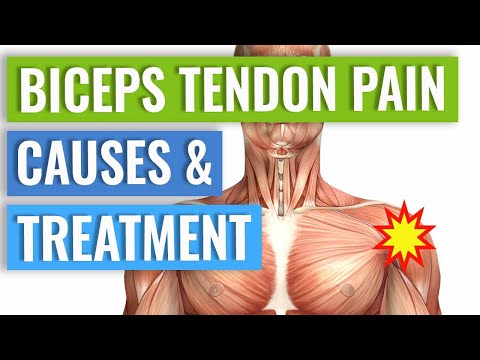
Arm - Bicep TendonitisBiceps tendonitis, more properly termed tendinosis, refers to the inflammation, pain, or tenderness in the region of the biceps tendon in the front part of the shoulder or upper arm. How can bicep tendonitis occur? Bicep tendonitis results from acute or chronic stress of the rotator cuff tendons. The injury typically occurs from repetitive overhead reaching multidirectional instability, calcifications into the tendon, repetitive weight training and in some cases direct trauma. Years of shoulder wear and tear can cause the biceps tendon to become inflamed. Examination of the tissues in these cases commonly shows signs of degeneration. Degeneration in a tendon causes a loss of the normal arrangement of the collagen fibers that join together to form the tendon. When this occurs individual strands of the tendon become frayed, some break, causing the tendon loses strength; which could also cause the tendon to eventually rupture. Because the bicep tendon attaches inside the shoulder through a small hole in the rotator cuff bicep tendonitis is usually associated with rotator cuff pathology. What are the symptoms? You feel pain when you touch the front of your shoulder or during certain activities, such as throwing. You feel pain when you move your arm and shoulder, especially when you move your arm forward over shoulder height. How is it diagnosed? Rotator cuff/bicep tendinosis is diagnosed by eliciting pain or weakness with stress testing of the rotator cuff muscles. There are two common tests used for diagnosis of impingement: The Neer’s Test and the Hawkins’ Test. The Neer's test elicits pain with passive abduction of the shoulder to 180 degrees. The Hawkins' test elicits pain with the shoulder passively flexed to 90 degrees and internally rotated. How is it treated? Treatment may include:
Most people if they pay attention to the signs and symptoms of tendonitis and address the problem early will respond to non-surgical therapy. Surgery may be recommended if the problem doesn't go away after such treatments, chronic conditions or when there are other shoulder problems present. The most common surgery for bicipital tendonitis is acromioplasty, especially when the underlying problem is shoulder impingement (see discussion above). Acromioplasty involves removing the front portion of the acromion, the bony ledge formed where the scapula meets the top of the shoulder joint. The purpose behind removing a small portion of the acromion is to create more space between the acromion and the humeral head so that there is less pressure on the soft tissues and the bicep tendon located in between the acromion and humeral head. Acromioplasty is a relatively simple procedure for a skilled orthopedic surgeon. It is usually done using an arthroscope. The surgeon will make a small incision in the skin over the shoulder joint; use the arthroscope to locate the deltoid muscle on the outer part of the shoulder. The surgeon will then split the front section of the deltoid so that the acromion is visible. Depending upon condition and style of the surgeon, the surgeon may also detach the deltoid muscle where it connects on the front of the acromion. The surgeon then will remove the bursa sac that lies just under the acromion. Following the removal of the bursa sac the surgeon will use a surgical tool is used to cut a small portion off the front of the acromion to create the required space between the acromion and the humeral head (note the ligament arcing from the acromion to the corocoid process, called the coracoacromial ligament may also be removed). The surgeon will then use a surgical file to shave the undersurface of the acromion to remove any bone spurs. Then a series of small holes are drilled into the remaining acromion so that the surgeon can reattach the deltoid muscle to the acromion. At this stage the surgeon will also inspect the rotator cuff muscle to see if any tears are present, since a large number of these injuries tend to go hand in hand. If there are no rotator cuff tears the surgeon will attach the free end of the deltoid muscle to the ridge of the acromion using the drill holes made earlier. If upon inspection the biceps tendon is severely degenerated, as was in my case, the surgeon may perform biceps tenodesis. Biceps tenodesis is a method of reattaching the top end of the biceps tendon to a new location when the biceps tendon is severely degenerated or when shoulder reconstruction for other problems is needed. The most common method of bicep tenodesis used today is called the keyhole technique. It is called this because a small hole, the size of a keyhole is made by the surgeon using a burr in the humerus, which the surgeon used to slide the end the tendon into. The tendon is then pulled down to anchor it in place. Before performing the reattachment, the tendon is prepared by cutting away frayed and degenerated tissue. Once prepared the surgeon rolls the top end of the bicep tendon into a ball, uses sutures to ensure that the ball shape stays that way and after bending the elbow to remove tension from the tendon, pushes the tendon ball into the top part of the keyhole. The surgeon gradually straightens the elbow, and as this is done the tendon ball is pulled into the narrow slot in the lower end of the keyhole, and is set in place. The surgeon completes the procedure by closing the incision with sutures. Recovery Everyone recovers from an injury at a different rate. Like other overuse injuries the length of recovery depends on many factors such as your age, health, severity of the injury, and if you have had a previous injury. Recovery typically involves controlling pain and inflammation with Ice, rest and anti-inflammatory medicines. Some surgeons prefer to have their patients start a gentle range-of-motion program soon after surgery; others prefer to start a few days after surgery. Once cleared by the surgeon they should be done every day for the first week post-op, to maintain blood flow and help prevent blood clots. Note: rehabilitation protocol and restrictions may vary based on extent of repair, and other factors, therefore rehabilitation protocol should be discussed with your surgeon. Physical therapy will typically begin 3-4 days after surgery under the direction of the surgeon. It is very important for you to start therapy when recommended and follow the recommended rehabilitative protocols in order to maximize recovery. Graduated physical therapy is vital to proper recovery and to increase muscle strength and range of motion during the recovery process. Physical therapy combined with assigned home exercising/strengthening may be required for approximately six to eight weeks. The first few therapy sessions may involve nothing more than passive range of motion exercises followed by ice and electrical stimulation treatments to help control pain and swelling from the surgery. If you are experiencing muscle spasm and significant pain your therapist may also use massage and other types of hands-on treatments to ease these symptoms. Once pain and swelling subsides physical therapy will involve gradually increasing the range of motion (ROM) and starting exercises to improve movement in the forearm, elbow, and shoulder. Care should be employed while performing ROM and strengthening exercises and avoid doing too much, too quickly. ROM exercises will most likely include:
During the first few weeks the strengthening program will most likely be limited to:
After four weeks, rehabilitation protocol typically includes:
Return to normal activities will be determined by how soon your tendon recovers, not by how many days or weeks it has been since the injury has occurred. You need to stop doing the activities that cause pain until the tendon has healed. If you continue doing activities that cause the tendon pain, your symptoms will return and it will take longer to recover. In general, the longer you have symptoms before you start treatment, the longer it will take to get better. A mild injury may recover within a few weeks, whereas a severe injury may take 6 weeks or longer to recover. Typically, patients may initiate light upper extremity weight training after 12-14 weeks. Persistent pain and weakness may be a sign of a serious strain of the biceps that may also involve tearing of the attachment of the tendon inside the shoulder joint. Such serious injury may require surgery. If persistent pain and weakness is experienced the injury should be re-evaluated by a surgeon.
Shoulder - Bursitis and TendonitisMany patients seek medical attention for shoulder pain, and a common diagnosis given is 'shoulder bursitis,' or 'shoulder tendonitis’. Shoulder bursitis and rotator cuff tendonitis are all ways of saying there is inflammation of a particular area within the shoulder joint that is causing a common set of symptoms. The best terminology for these symptoms is 'Impingement Syndrome.' Impingement syndrome occurs when there is inflammation of the rotator cuff tendons and the bursa that surrounds these tendons. Shoulder Impingement Syndrome (aka shoulder bursitis/ tendonitis) Impingement Syndrome is a common condition affecting the shoulder. It is most commonly seen in aging adults. Impingement syndrome refers to impingement of the rotator cuff tendons, especially the supraspinatus tendon, under the subacromial arch. The biceps tendon or the subacromial bursa may also be impinged under the subacromial arch. Impingement Syndrome is closely related to shoulder bursitis and rotator cuff tendonitis. It is not uncommon for these conditions to occur in combination. It is not clear whether rotator cuff muscle/ tendon overload precedes impingement or is caused by it. (References: Souza TA, ed. Sports Injuries of the Shoulder. New York, NY:Churchill Livingstone; 1994., 56.Sharkey NA, Marder RA. The rotator cuff opposes superior translation of the humeral head. Am J Sports Med. 1995; 23(3): 270-275.). How Impingement Occurs When an injury (be it directly or through overuse) occurs to the rotator cuff muscles, they respond by swelling. The pressure within the muscles increases, which results in compression because the muscles in the shoulder are surrounded by bone. When this compression occurs there is a loss of blood flow in the small blood vessels. When blood flow decreases to the muscle repetitive motions fray the muscle. Radiographs of the fray muscle show a picture much like a frayed rope. Once this damage occurs routine motions such as reaching up behind the back and reaching up overhead may cause pain. Additionally, weakness of shoulder muscles may also occur. If the blood flow to the area continues to be constricted or stress injures the muscle, the muscle can actually tear in two. This is what is referred to as a rotator cuff tear. Symptoms of a rotator cuff tear include significant weakness of the shoulder, and often difficulty in elevating the arm. If the impingement is left untreated, bicep rupture may also occur. A major factor in shoulder impingement injuries in weight lifters is muscle imbalance. Many bodybuilders tend to train the pectorals and the lats significantly. These exercises tend to produce internal rotation of the shoulders. Exercises that strengthen the external shoulder rotators (the infraspinatus and the teres minor), and stretches to relieve the tightness to the internal rotators are often neglected. This results in overly tight shoulder internal rotators and weak shoulder external rotators, which can lead to impingement. Other contributory factors to impingement for bodybuilders is the amount of sets performed doing exercises that put a considerable amount of stress imposed on the rotator cuff muscles such as the bench press. Often you will see weightlifters doing upwards of 15 sets this bodybuilding staple (Incline, decline, flat, and smith machine). Too many sets of exercises for the same body part with excessive weight can result in fatigue and overload injury to the rotator cuff. Therefore, weight lifters should be encouraged to perform fewer sets of exercises that can result in fatigue and overload injury to the rotator cuff. What are the symptoms? Routine motions such as reaching up behind the back and reaching up overhead may cause pain. Additionally, weakness of shoulder muscles may also occur. If the blood flow to the area continues to be constricted or stress injures the muscle, the muscle can actually tear in two. This is what is referred to as a rotator cuff tear. Symptoms of a rotator cuff tear include significant weakness of the shoulder, and often difficulty in elevating the arm. If the impingement is left untreated, bicep rupture may also occur. How is Impingement Syndrome diagnosed? Diagnosis begins with a medical history and physical examination by your doctor. Strength tests will initially be taken to determine if significant weakness is present. X-rays will often be taken to rule out arthritis, bone spurs, changes to bone contour or changes in the bone calcification that indicate injury of the muscle. Impingement may be suspected when an injection of a small amount of an anesthetic into the space under the shoulder bones relieves pain. An MRI or arthrogram may also be taken to identify impingement and rule out a rotator cuff tear. How is Impingement Syndrome treated? The vast majority of people who have impingement syndrome are successfully treated with anti-inflammatory medication, stretching exercises and temporary avoidance of repetitive overhead activity until the condition settles down. Only a minor percentage of people who have impingement syndrome eventually require surgery. Anti-inflammatory medicines are medications prescribed to reduce inflammation. There are two types of anti-inflammatory medications. They are steroidal or non-steroidal drugs. Nonsteroidal anti-inflammatory medications such as aspirin, naproxen (Aleve) or ibuprofen (Motrin, Nuprin), coupled with the use of ice to reduce inflammation and rest is the most common treatment plan for this condition. NSAIDs are particularly useful not only because they help decrease pain, but they also help control swelling and inflammation. NSAIDs are available both over-the-counter and as a prescription. This treatment plan typically takes 6 to 10 weeks to be effective. Why? Because anti-inflammatory medications must be taken for a significant period of time (with rest to the muscles) to address the underlying problem, otherwise the symptoms (including the pain) will in most probability reappear. The length of treatment, the choice of anti-inflammatory and the success of the treatment will vary from person to person. There are several new NSAIDS (the so-called COX-2 inhibitors) on the market. There has been no study showing that newer NSAIDs treat pain or swelling any better than more traditional NSAID medications such as aspirin and ibuprofen. All medications have side effects, and the most common side effect from NSAIDS is stomach or gastrointestinal upset. Therefore, NSAIDS should be taken with food, and discontinued if abdominal pain persists. Other common side effects may include nausea, vomiting, diarrhea, constipation, decreased appetite, dizziness, rashes, headache, and drowsiness. Another side effect of NSAIDS is interfering in the normal blood clotting mechanism. NSAIDs can cause ulcers in the stomach and promote bleeding. Patients on chronic NSAID use may notice easy bruisability, bleeding gums, or other signs of 'thinned blood'. NSAIDs may also cause fluid retention, leading to edema. The most serious side effects are kidney failure, and liver failure. One of the best reasons to consider some of the newer medications, however such as Celebrex, is that these may be taken as once-a-day doses rather than three or four times daily, and the COX-2 inhibitors are thought to have fewer side-effects on the stomach. Additionally COX-2 inhibitors may be the medicine of choice if there is a need to take medication for several months or longer. Reference: Berger, RG "Nonsteroidal Anti-inflammatory Drugs: Making the Right Choices" J. Am. Acad. Ortho. Surg., Oct 1994; 2: 255 - 260. When taking NSAIDs, it is important to realize that people may respond differently to medication. It is difficult to predict which medications will most benefit a given individual. Therefore the best way to determine which NSAID is best for you is to try different options. If adequate relief of symptoms is not obtained within several weeks of treatment, your surgeon should prescribe a different NSAID. If you have persistent symptoms, despite the use of oral anti-inflammatory medications, your doctor may consider a anti-inflammatory injection such as cortisone. Injectable cortisone is synthetically produced and has many different trade names (e.g. Celestone, Kenalog, etc.), but is a close derivative of your body's own product. The difference being synthetic cortisone is a potent anti-inflammatory medication. Cortisone injections usually work within a few days, and the effects can last up to several weeks. The most common side-effect is a 'cortisone flare,' a condition where the injected cortisone crystallizes and can cause a brief period of extreme pain that usually lasts a day or two and is best treated by icing the injected area. Another common side effect is lightening of the skin where the injection is given. This can be quite pronounced in people with darker skin. The steroidal anti-inflammatory medication can have serious side effects in addition the symptoms experienced with NSAIDs, such as:
Reference: http://www.baptistonline.org/health/library/bone3415.asp Cortisone should be used only when necessary because it can result in weakening of muscles and tendons which then may subject to tearing. In addition to taking anti-inflammatory, ice should be used after any activity that may cause irritation. Daily controlled stretching in a warm shower may also help. Repetitive motion activities with your injured arm should be avoided. Motion where the elbow would move above shoulder level should also be avoided. Recovery Post-surgical care for impingement and rotator cuff tears are similar (see above), but with some slight differences, such as:
|
| < Prev | Next > |
|---|
Contact Our News Editors |
||
|
||
| Back to Front Page |
List of all Health and Medical Sections |
|
| Cancer |
| Diseases and Conditions |
| Heart Health |
| Health and Medical |
| Mental Health |
| Mind, Body, Spirit |
| Natural Medicine/Natural Healing |
| General Nutrition Articles |
| Healthy Eating |
| Latest Health and Medicine Studies |
| Nutrition Basics |
| Vitamins and Supplements |
| Weight Management |
Visitors: 10135237
Designed by: HostAfric.com |