Many people struggle to build their back because they limit the lifts they do that focus on building a strong back. These back exercises are essential for anyone who is building a well-rounded physic.
With that said, have you ever wondered what back exercises are the best to build a perfect back? Here’s a list of the most effective and proven back exercises that will strengthen, widen and thicken your back.
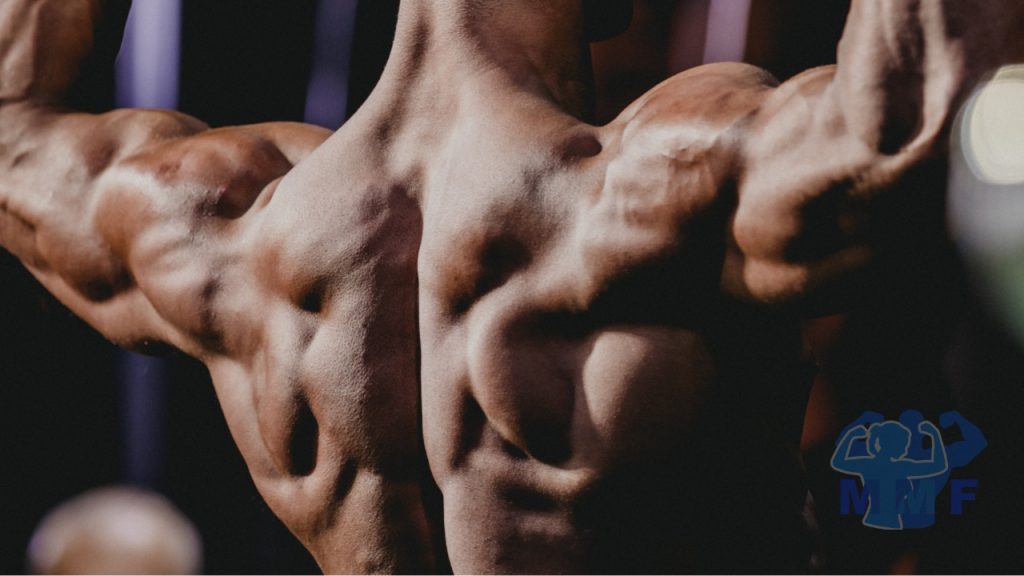
The “Back” is not a muscle. The “Back” is actually a group of muscles; three main muscles and several smaller muscles. The three main muscles are
- Your Trapezius is the diamond-shaped muscle located near the top of your back and it helps your neck and shoulder blades move
- Latissimus Dorsi, the largest muscle in the body that is ) is located near the sides of the back. The “lats” are used for pulling the shoulders downward and toward the back
- The Rhomboids, located in the center of the back and are used to squeeze the shoulder blades together.
Best Back Exercises
Deadlifts – The Super Star of The Best Back Exercises
To set up: Stand in front of a barbell with your shins close to the bar. Place your feet shoulder-width apart. Then, grab the bar with your hands slightly wider than shoulder-width. While, keeping your arms straight, bend your legs and straighten your back. You want to position yourself as if you were doing a squat with the barbell at arm’s length in front of you.
Stand in front of a barbell with your shins close to the bar. Place your feet shoulder-width apart. Then, grab the bar with your hands slightly wider than shoulder-width. While, keeping your arms straight, bend your legs and straighten your back. You want to position yourself as if you were doing a squat with the barbell at arm’s length in front of you.
To Deadlift: Pull the barbell from the ground by straightening your legs and torso until your body is straight up and down. Remember to pull your shoulders back and pause at the top. At the end lower the bar back to the floor, maintaining your back tight.
Deadlift Tips
Keep your head up. Look at yourself in a mirror or at a spot on a wall. Keeping your head up will help you keep your back tight throughout the movement, but especially in the down position.
Variations: Deadlifts can be performed using dumbbells or barbells, with one hand or two hands & with one leg or two legs. Traditional style variations of the standard Deadlift include the Romania Deadlift, commonly used by Olympic Weightlifters. The Romania Deadlift utilizes the strength of your hamstrings and glutes more. The Sumo Deadlift is a variation whereby your legs are spread far apart to the sides (arms reaching down inside of legs), mimicking a sumo stance. This changes the emphasis of the lift to the legs and glutes instead of the back.
The Sumo Deadlift is purported to be easier for those with large waists as well as those with relatively long torsos and shorter arms; however, the Sumo Deadlift may place greater stress on your hips and hamstrings, as well as the connective tissues of the pelvic bone. Other Deadlift variations include the Side Deadlift (AKA Suitcase Deadlift, Box Deadlift, Rack Pull Deadlift, Deadlift Lockouts, “Kuck Pulls” and Straight Leg Deadlifts (which is a hamstring exercise and not an exercise designed to work the back).
Barbell Bent Over Rows
To set up: Stand on a box or platform with the loaded barbell to avoid the plates bouncing on the floor when you use large plates. You want your stance to be shoulder-width for conventional barbell rows.
To perform a row: Grab the bar with your fingers wrapped over the top, hands slightly wider than shoulder-width. You want to keep your knees slightly bent, your back straight and, head up. Then bend over until your upper body is lower than 45 degrees to the floor. Now start a row by using your back muscles to pull the bar straight up and touch your chest. Your elbows should be tucked in, head up, back straight, and do not bounce. Next, lower the weight under control and repeat.
To perform a pronated underhand grip row: Bend over at the waist and grab a barbell with your fingers under the bar, placing your hands shoulder-width apart. Keeping a slight bend in your knees. Lift the bar with your arms. Keeping your upper body at a 45-degree angle to the floor and your back arched. Utilizing your arms row the barbell toward your stomach. Hold the contracted position while squeezing your back muscles for a second and maximize your muscles peak contraction. Finally, lower the bar by straightening your arms. Do o not let the barbell touch the floor in between each rep, this will keep the tension on your muscles.
Barbell Bent Over Rows Tips
For variety you can use a pronated EZ bar, to change your hand position and stabilizing muscles.
Variations: close grip, wide grip, medium grip, two-arm dumbbell rows, supinated rows (palms facing away). The T-bar is another machine that can be used for rowing. If your gym doesn’t have a T-Bar you can put one end of an Olympic bar in the corner of a room, then add weight to the other end. Attach a neutral grip handle to the bar to get your T.
Pull-Ups and Chin-Ups
To set up: Stand on a box or a platform if you need to, or jump up so that you can reach the bar. Pull-ups are typically harder than chin-ups, but I recommend you switch off between the two. Chin-ups use a supinated grip (with your palms up), while pull-ups use a pronated grip (with your palms down, in this case, your palms are facing away). You want your hands to be a little wider than shoulder-width for a medium grip pull up, and just inside your shoulders for a medium grip chin up.
To Pull up: Your goal should be to pull your chin over the bar. You can keep your head up, by looking at the ceiling. Keeping your chin up will help you get it over the bar. Pause at the top long enough to get a full contraction in your back and arms. Then, lower yourself back down until your arms are as straight as you can without locking your elbows. Most importantly don’t bounce.
If you can’t do a pull-up, most gyms have an assisted pull-up machine. You can always start there and work your weight towards your first bodyweight pull up.
Weighted Pull-ups
Once you can do more than ten pulls up with your body weight, it is time you consider doing weighted pull-ups and weighted chin-ups. The best way to perform weight pull-ups and chin-ups are with a lifting belt with a chain. You can hang plates between your legs or ankles, or by using the belt and chain to suspend the weight between your legs.
Pull-up and Chin-up Technique and Tips
- Start each rep from a dead hang with your arms straight, but elbows not locked. Clear your chin above the bar on every rep.
- Squeeze The Bar. Placing the bar close to your fingers, and not in the palm of your hand minimizes callus formation.
- Breathe at The Bottom. It’s easier to breathe between reps while at the bottom. Take a big breath in before pulling yourself up. Breath out on the way down.
- Chest Up. Don’t let your shoulders go forward: it’s unhealthy for your shoulders. Lead with your chest up and keep your shoulders back.
- Look Up. Never look down during Pull-ups & Chin-ups. Look at the bar. Look where you’re pulling yourself up to.
- Elbows to The Floor. Drive with your elbows to the floor. This involves your stronger back muscles more.
- Bend Your Legs. And cross your feet. Letting your legs hang means less strength in my experience. Squeeze your glutes on the way up.
Variations: Most variation can be done by changing your grip, either wide, narrow, or neutral grip (palms facing each other). Additionally changing from pull-ups to chin-ups. When you are looking for a real challenge, and grip and forearm strength then try towel pull-ups. Many people do lat pulldowns on machines or with cables, but after you can lift your own body weight, it becomes more of a challenge to pull the bar to starting position when it weighs more than you. Additionally, it is much more satisfying to do weighted pull-ups and chin-ups at the gym!
Wide-Grip Lat Pull Downs
To Set Up: Position yourself on the lat pulldown machine with your upper thighs right up under the pads (they are thigh pads, not knee pads). Grip the bar at your desired width. Depending on the desired width of the grasp (moving hands closer, or farther apart will stress different parts of the muscles) grasp the overhead bar in a pronated grip (overhand with your palms facing away from you towards the front, knuckles up and toward the rear). Your feet should be flat on the floor with your thighs tucked under a padded bar, to keep your butt seated firmly.
To Perform the Wide Grip Lat Pull Down:
- Start with your hands near the ends of the bar arms straight and palms facing forward.
- While keeping your chest up and your elbows out to the side, pull the bar in a smooth, controlled fashion straight down under your chin, toward the top of your chest. You should execute this move by concentrating and attempting to bring the shoulder blades together in the back. While you try to bring your elbows as far towards the floor as possible.
- Hold in this position briefly, concentrating on form and bringing your shoulder blades close and contracting your Lat.
- Slowly return the bar upward until your arms are straight while moving your shoulder blades apart and your shoulders up high as if you are shrugging.
- Next, allow the pull of the bar to stretch your muscles in your back that were contracted while performing the exercise.
- Finally, relax for a second, pausing before you repeat the exercise until your desired repetitions are complete and your muscles are exhausted. Precisely according to your plan.
Wide-Grip Lat Pull Downs Tips
Do not lean back and use your body weight to pull the bar down. Remember to “Pull” the weight with the Latissimus Dorsi muscles (the “wings”) while bringing your shoulder blades together. Envision trying to hold a tennis ball with your shoulder blades. Ensure that your muscles are stretched at the top of your reach and fully contracted at the bottom of the exercise. Full range of motion is critical to ensure complete muscle involvement and maximizing benefits derived from performing the exercise.
Variation: The Wide Grip Lat Pull Down can be varied by changing two major positions involving your grip. Different widths of the hands from nearly twice as wide as shoulder width to as close as inside the shoulder. You can also change the position of your hands from overhand to supinated, to parallel. Changing your hand position will alter the path your elbows take and thus stress different portions of your muscle. Various bars are made that can change hand position, which can vary your workouts. Additionally, cables or ropes may be used by advanced bodybuilders to escape the motion limitations imposed by the use of a single bar.
Close Grip Lat Pull Downs – Mid back, lats
To Set Up: Choose either the “V” bar or a bar designed to allow a close grip while still maintaining bar stability. Note: different bars and different hand grips will stress different parts of the muscles. Position yourself on the lat pulldown machine. Position your thighs directly up under the pads (they are thigh pads, not knee pads). The normal grip is slightly less than shoulder-width, underhand grip (palms facing you) on the bar or use a V-bar.
To Perform: While keeping your chest up, pull the bar down to your lower pecs, leaning slightly and smoothly backward as you pull to hit all the fibers in the lats. Squeeze your shoulder blades together behind your back as you pull the bar down.
- Start with the body vertical, arms straight over your head
- While keeping your chest up and your elbows to your side, pull the bar in a smooth, controlled fashion straight down under your chin, toward the top of your chest. You should execute the movement by concentrating on attempting to bring your elbows as far towards the floor as possible while bringing your shoulder blades together in the back.
- Next, hold this position briefly, concentrating on form and bringing your shoulder blades close and contracting your Lats.
- Then, slowly and in a controlled manner, return the bar upward until your arms are straight. During the raising of the bar move your shoulder blades apart and your shoulders up high as if you are shrugging. Allow the pull of the bar to stretch these muscles in your back that were contracted while performing the exercise. Relax for a second, pause and repeat the exercise until repetitions are complete or muscle is exhausted, according to your plan.
Close Grip Lat Pull Downs Tips
This movement should be done as a two-part movement to work your back best.
- Start with just dropping your shoulder girdle.
- Your arms should not be bending during this part of the movement.
- Though, your shoulders should drop down a few inches.
- Practice this short movement a few times.
- Once you have the feel for that, continue with the pull-down movement.
- This technique will lock your lats into activation.
- Repeat this technique at the beginning of every rep.
Do not lean back to far. Also, do not “jerk” the weight. Jerking reduces the effectiveness of the exercise by taking tension off the target muscles. It also has the potential to damage your lower back. Your movement should be a smooth movement.
Variation: The Close Grip Lat Pull Down can be varied most notably by the hand position. Changing the position of the hands from overhand to supinated, or parallel will alter the path your elbows take and thus work different portions of your muscles. Cables and ropes are used by advanced bodybuilders to escape the motion limitations imposed by the use of a single bar. When you use cables, you may find the exercise more difficult because of the stability required to keep the movement fluid.
Barbell Shrugs – Upper back
To set up: Stand holding barbell with a overhand or mixed grip; shoulder width or slightly wider.
To shrug: take an overhand grip on the bar just outside your hips and unrack the weight so that it hangs to mid-thigh. Always stand straight with your head up, and knees slightly bent. Pull your shoulders up as if you are trying to touch your ears by shrugging straight up, as high as you can. Hold for half a second to get that contraction. Lower the weight under control back to mid-thigh.
Barbell Shrugs Tips
It’s only necessary to raise and lower the shoulders during shrugs. Do NOT roll the shoulders.
Variations: There are many variations to the standard shrug. variations include dumbbell shrugs, reverse grip shrugs, behind the bak shrugs, Cambered Bar Seated Shrug, Trap Bar Shrug, Smith Machine Shrug, Cale Shrug, Lever (Plate Loaded) Shrug, just to name a few.
One Arm Dumbbell Rows
There are a couple of different ways for doing One Arm Dumbbell Rows. I prefer to do One Arm Dumbbell Rows off the floor with both feet on the floor, with a huge step and one hand on the dumbbell rack. One Arm Dumbbell Rows can also be done using a weight bench. The use of a bench is usually more common. So we will discuss how to perform One Arm Dumbbell Rows this way. In both positions bend over, so your back is parallel with the ground. Now reach down and pick up a dumbbell while keeping your back flat and parallel to the floor. The other arm should be locked out on the bench.
To set up: Grab a dumbbell and place it beside a bench. Now place one leg (knee) up on the bench for support, and the other leg on the floor just behind you creating a base. Next, place your hand on the other end of the bench for support. Finally, your upper body should be parallel to the floor.
To row: Grab the dumbbell with a neutral grip (palm facing your body), arm fully extended and lift the dumbbell off the floor. Without cheating pull (lift) the dumbbell in a slow controlled fashion to side until it makes contact with ribs or until the upper arm is just beyond horizontal. Keep your stomach tight, and do not rotate your body especially your hips. Squeeze the lats before lowering the dumbbell to the starting position about an inch off the floor. Repeat to failure. Then continue with the opposite arm.
One Arm Dumbbell Rows Tips
Be sure to keep your abs contracted throughout the movement to support the lower back. Allow scapula to articulate but do not rotate torso to throw weight up. Torso should be close to horizontal. Positioning the supporting knee and arm slightly forward or back will allow for proper leveling of your torso.
Variations: you can use a machine or a cable exercise for this, but I highly recommend you stick with free weights.
Honorable mentions: Pull-overs (an auxiliary isolation exercise that works primarily the lats), Hyperextensions (an auxiliary compound exercise that targets the spinal erectors, lower back, buttock, adductor magnus, and hamstrings), and cleans and snatches for the traps.