

Are you looking for a way to add intensity to your core workouts? Look no further! In this blog post, we’ll be discussing the top weighted core exercises you can do to strengthen and tone your abdominal muscles. These exercises are great for beginners and experienced athletes alike. Learn how you can incorporate them into your routine and get ready for that six-pack! Read on to learn more and take your core workout to the next level.
- Introduction
- What are Weighted Core Exercises?
- Benefits of Weighted Core Exercises
- The Top Weighted Core Exercises For Abs and Obliques
- Barbell Deadlift
- Barbell Straight Leg Deadlift
- Squat
- Cable Kneeling Crunch
- Weighted Incline Twisting Situp
- Weighted Hyperextensions
- Equipment Needed for Weighted Core Exercises
- How to Perform Weighted Core Exercises Safely
- Tips for Making the Most of Your Weighted Core Workouts
- Conclusion
Introduction
Weighted core exercises are a great way to build strength in your core and improve your overall fitness. They involve using weights or resistance bands to add extra challenge to your core workouts. Weighted core exercises can help you build endurance and strength, improve posture, and even reduce back pain. In this article, we’ll look at some of the top weighted core exercises and how to do them properly. With the right technique, you’ll be able to get the most out of these powerful exercises.
What are Weighted Core Exercises?
Weighted core exercises are an effective way to strengthen the muscles in your core. These exercises involve using weights to add resistance to your workout. They are especially beneficial for targeting specific areas of your midsection, such as your obliques and lower back. Here are some of the top weighted core exercises you can do to help build strength and stability in your core.
Benefits of Weighted Core Exercises
Weighted core exercises are a great way to build strength and stability in your core muscles. Doing weighted core exercises regularly can help to improve posture, balance, and overall physical performance. Here are some of the best weighted core exercises you can do to get the most out of your workout.
The Top Weighted Core Exercises For Abs and Obliques
Weighted Plank: This exercise helps to work your entire core. Start in a plank position with your feet on a stability ball and have some place a weight on your back or wear a weighted vest. Keeping your body straight for as long as you can.
Weighted Sit-Ups: This exercise works your entire core, particularly focusing on your abdominal muscles. Lie on your back with a weight held close to your chest. Then, sit up and bring the weight up with you as you come into a sitting position. Slowly lower yourself back down and repeat.
Weighted Russian Twist: This exercise focuses on strengthening your obliques and stabilizing your lower back. To do this exercise, hold a weight in both hands and sit with your legs bent and feet flat on the floor. Lean back slightly and twist your torso to the left side, bringing the weight down to the floor. Then, twist back to the right side and repeat.
Medicine Ball Sit-ups: Sit-ups are a classic exercise that can be done with or without weight. Adding weight in the form of a medicine ball makes the exercise more challenging and adds an extra layer of difficulty. Make sure to keep your back straight and do not overarch when performing sit-ups.
Weighted Dead Bug: The dead bug is another great exercise for targeting the core muscles. To do a weighted dead bug, hold a weight plate or medicine ball above your chest while lying on your back with your knees bent and feet flat on the ground. As you lower the weight, make sure to keep your lower back flat against the ground.
Weighted hip thrusts: Place a barbell across your hips with a weighted plate on each end. Keeping your back flat and core engaged, lift the barbell off the ground until your hips are extended fully. Hold for a few seconds before lowering it back down again.
These exercises are excellent for building strength and stability in your core muscles. Incorporate them into your regular workout routine for best results!
Barbell Deadlift
Barbell Deadlift

The Barbell Deadlift is an excellent exercise for building strength and power in the lower body, targeting muscles such as the glutes, hamstrings, and quads. The benefits are numerous, including increased overall strength, increased muscle mass, and improved core stability. Check out our guide to learn how to do the Barbell Deadlift correctly and get the most out of it!
The Deadlift is too often ignored in general fitness weight training, although the Deadlift is a specialty of power lifters, the Deadlift can be use for strengthening the body’s cores as well. Just like the squat, the deadlift is a premier exercise for anyone wanting to strengthen the body’s core while building great looking legs and backside.
The Deadlift becomes one of the premier core exercises by working the Target muscle Erector Spinae, with Synergist muscles Gluteus Maximus, Adductor Magnus, Quadriceps, Soleus and Stabilizing muscles Hamstrings, Gastrocnemius, Trapezius Middle and Upper, Levator Scapulae, Rhomboids, Rectus Abdominis, Obliques.
Deadlift Exercise Procedure for Strengthening the Body’s Core
Perform the Deadlift by pushing through the heels and bringing your hips forward, not by pulling back with your lower back. If you Deadlift correctly, you’ll feel most of the stress in your upper-back, glutes and hamstrings.
- Stand with feet approximately shoulder-width apart with toes slightly pointing out. Put your shoulder-blades directly over bar and shoulders in front of the bar. Grip the bar with a “reverse grip” (one palm faces you, the other palm facing away).
- Push from the heels and pull the bar up in a straight line.
- Keep the bar in contact with your body during the whole Deadlift, rolling the bar over your shins & thighs.
- Bring your hips forward by pushing from the heels and squeezing your glutes hard.
- The Deadlift ends when your knees and hips are locked.
- Bring the weight down, controlled but not slow, while keeping your chest up, shoulders back and looking forward.
- Keep the bar in contact with your thighs until it reaches knee level.
- Flex at the hips first to return the bar below knee level. Then bend at the knees until the bar is on the floor.
Tips: To minimize risks of injuries when completing Deadlifts, make sure you follow the correct Deadlift procedure. While performing the Deadlift make a big chest by keeping your chest up and pulling your shoulders back. Keep this position at all times and your back will never be able to round. Practice with light weight until you have mastered the correct Deadlift form and procedure before moving to heavier weight.
Barbell Straight Leg Deadlift
Barbell Stiff Legged Deadlift
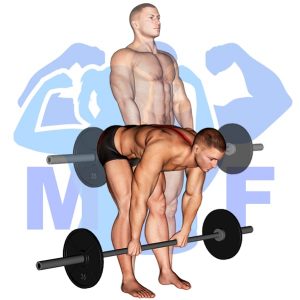
The Barbell Stiff Legged Deadlift is an excellent exercise for strengthening your hamstrings, glutes, and lower back. It also provides many functional benefits such as improved balance and core stability. Check out our tutorial or guide to learn more about this great exercise!
Straight Leg Deadlift is one of those exercises that if done right, will be one of the top weighted core exercises in your routine for strengthening the body’s core.
The Target muscle use while performing the Straight Leg Deadlift is Erector Spinae with Secondary Muscles (synergist/stabilizers) Hamstrings, Gluteus Maximus, Adductor Magnus, Trapezius (Upper, Middle, Lower), Latissimus Dorsi, Lavator Scapulae, Rectus Abdominis and Obliques.
Straight Leg Deadlift Procedure for Strengthening the Body’s Core
- Pick up the barbell off the ground using the power from your legs (not your back), pull your shoulders back, stick out your chest and arch the back slightly with eyes looking forward.
- Space your feet slightly narrower than shoulder-width apart and hold the bar with a “reverse grip” (one palm faces you, the other palm facing away) just outside of your legs.
- Keeping a slight bend in your knees, bend forward at the waist and lower the weight toward the ground.
- Lower the weight down until you feel a full stretch in your hamstrings.
- Pull the weight back up into the standing position but stop just short of being fully erect.
- Continue the motion until you have reached muscular failure.
- Rest and repeat.
Tips: It is extremely important that you do not round out your lower back at any point while performing Straight Leg Deadlifts, but instead maintain a slight arch at all times. When completing Straight Leg Deadlifts keep your back flat, focus on sticking your butt out and keeping the bar close to your body. You must also remember to keep a slight bend in your knees as you perform the Straight Leg Deadlifts as this will keep the tension on the hamstrings and minimize your risk of injury.
Squat
Barbell Low Bar Squat

The Barbell Low Bar Squat is an excellent exercise for strengthening the glutes, hamstrings, and quads. This exercise also offers core strength, improved posture, and enhanced athleticism. Check out our tutorial or guide to learn how to perform the Barbell Low Bar Squat correctly!
Squat is the king of all exercises, working over 256 muscles in one movement! Squats are also a big power movement exercise. With Squats as a big power exercise and working numerous muscles, it’s no wonder that it’s also one of the best core strengthening exercises out there.
Target muscle use while performing Squats are the Quadriceps with Secondary Muscles (synergist/stabilizers), Gluteus Maximus, Adductor Magnus, Soleus, Hamstrings, Gastrocnemius, Erector Spinae, Rectus Abdomimis and Obliques.
Squats Exercise Procedure for Strengthening the Body’s Core
- Setup for the Squats by setting the barbell to just below shoulder height on the rack and loading the weight you want to use.
- Stand under the bar with your feet at about shoulder width apart with your toes pointing slightly outward and rest the bar on your lower traps and rear shoulders.
- Take your hands over the back and grip the bar with a wide grip for stability.
- Bend at the knees and straighten your back in preparation to take the weight off the rack.
- Keep abs tight, back straight and eyes up, push up through the legs and take the weight off the rack.
- Take a small step back and stabilize yourself.
- Keep your eyes facing forward and slowly lower your body. As you lower your body don’t lean forward, your buttocks should come out and drop straight down.
- Squat down until your thighs are parallel with the floor, then slowly raise your body back up pushing through your heels. Do not lock the knees out when you stand up.
- Repeat the movements until desired number of reps are completed.
Tips: There are many easy mistakes that can be made while performing Squats, so it’s important that you have your technique down before you attempt to squat with heavy weights. You should start out performing Squats by using very light weights until you get a good feel for the lift and can execute it with perfect form. If you perform Squats correctly, you should not feel any pain in your lower back. Lower back pain is usually a sign that you are not using correct form when performing Squats and/or your core is weak. It’s recommended not to take the Squat exercise to all-out failure since you could easily hurt yourself.
Cable Kneeling Crunch
Cable Crunch

The Cable Crunch is an effective exercise that targets the abdominal muscles, helping you to build core strength and stability. It also helps to strengthen the upper body and lower back. Check out our tutorial or guide to learn how to do the Cable Crunch correctly!
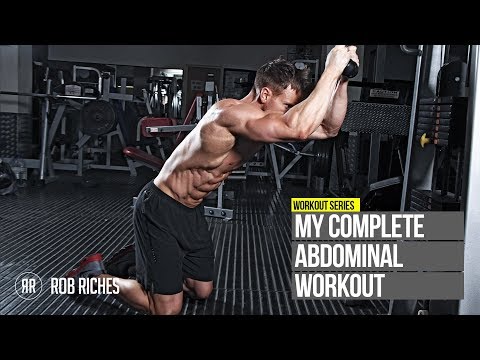
The abdominals is one of the most important muscle groups to exercise regularly to help in developing a strong core. Cable Kneeling Crunch will strengthen the abdominals which do much of the work in keeping the lower back aligned correctly. Cable Kneeling Crunch is a top exercise for building strong abdominal muscles, which also leads to a strengthening of the back and creating a more powerful and stronger core.
Target muscle use while performing Cable Kneeling Crunch are Rectus Abdominis with Secondary Muscles (Synergist/Stabilizers), Obliques, Lliopsoas, Tensor Fasciae Latae, Rectus Femoris, Sartorius, Latissimus Dorsi, Teres Major, Deltoid Posterior, Triceps Long Head, Rhomboids, Trapezius Lower, Pectoralis Major Sternal, Pectoralis Major Clavicular, Pectoralis Minor and Serratus Anterior.
Cable Kneeling Crunch Procedure for Building a Strong Core
- Facing cable tower, kneel below a high pulley and grab cable rope attachment with your hands.
- Place wrists against head, flex hips slightly and allow the weight to hyperextend the lower back.
- With hips stationary, flex your waist so elbows travel toward middle of thighs while exhaling.
- Pause and return to starting position, while inhaling, with keeping tension on the abdominals.
- Repeat.
Tips: Use light weight while performing Cable Kneeling Crunch until you have the full range of movement with proper extension and contraction completed. While performing the Cable Kneeling Crunch exercise your butt should stay touching your heels without pivoting at the hips and with concentrating on crunching your abs in. As you increase weight with Cable Kneeling Crunch it may be more comfortable to rest the rope and hands on shoulders.
Weighted Incline Twisting Situp
Weighted Incline Twisting Situp is an advanced body building exercise for strengthening the abdominals, obliques and overall strengthening of the body’s core. Some may have difficulty performing Weighted Incline Twisting Situp because it being an advance exercise, but when mastered it becomes a premier core exercise by working the complete abdominal muscle group.
Muscle groups worked by Weighted Incline Twisting Situp are Obliques as the Target muscle, lliopsoas, Tensor Fasciae Latae, Rectus Femoris, Sartorius, Rectus Abdominis and Tibialis Anterior as Secondary muscles (synergists/stabilizers).
Weighted Incline Twisting Situp Procedure for Building a Strong Core
- Hook your feet under the foot braces and lie on bench with feet raised higher than your head and knees at a 90 degree angle.
- Grasp a plate across the chest or behind your head with both hands.
- Raise upper body off of the bench and flex the abdominals while twisting to the right or left.
- Slowly return to original position.
- Repeat and twist to the opposite side.
Tips: Weighted Incline Twisting Situp can be done with or without weight, and the weight can be adjusted and/or bench can be elevated to increase resistance.
Weighted Hyperextensions
Plate Hyperextension

Plate Hyperextension is a great exercise for strengthening the lower back and glute muscles. It is a safe and effective way to improve core strength and stability. Check out our tutorial or guide to get started with Plate Hyperextension today!
Hyperextension is a great exercise for strengthening the lower back. Strong lower back muscles will enable you to have a stronger core. Strengthening the lower back along with abs will you virtually eliminate all back pain associated with having a weak core. Hyperextensions is rated one of the best isolation exercises for targeting the lower back and strengthening the body’s core.
Hyperextensions target Erector Spinae muscles directly with Secondary muscles Gluteus Maximus, Hamstrings and Adductor Magnus. If weight is held behind the head Spienius and Levato Scapulae muscles are activated as additional stabilizers.
Weighted Hyperextensions Procedure for Developing a Strong Core
- Adjust the Hyper Extension Bench so that your waist is in line with the top of the pad.
- Lie face down and position your feet firmly on the platform tucking your ankles securely under footpads.
- Start with your body in a straight line. Cross your arms in front of you and hold a weight to your chest (optional holding weight behind neck).
- Bend at the waist and lower your body towards the ground until you reach about 65-75 degrees.
- Pause briefly at the bottom and then raise yourself back up to the starting position where your back is in a straight line with your lower body.
- Repeat.
Tips: While performing Hyperextensions focus on keeping the tension on your lower back throughout the entire motion. To get the best results perform Hyperextensions with slow and controlled movements. Do not round your back, keep your back flat while performing Hyperextensions. When coming back to the starting position do not arch your back past a straight line.
Honorable Mention:
Barbell Push Crunch, Weighted Hanging Leg-Hip Raise, Weighted Incline Crunch, Dumbbell Side Bend, Weighted Lunges, Barbell Front Squat, Weighted Hack Squat, Weighted 45-degree Hyperextensions.
Equipment Needed for Weighted Core Exercises
Weighted core exercises are a great way to strengthen your core muscles. To get the most out of these exercises, you will need some equipment. Here is what you need to do weighted core exercises: Weight Plates, Barbell and if desired a weighted vest.
Having the right equipment is essential for getting the most out of your weighted core exercises. Make sure you have all the necessary equipment before you start your routine!
How to Perform Weighted Core Exercises Safely
When performing weighted core exercises, it is important to follow safety guidelines in order to avoid injury. Here are some tips for doing weighted core exercises safely: Start slowly and increase the weight gradually over time. It is important to give your body time to adjust to the heavier weight before attempting more difficult exercises.
Make sure you have proper form. Doing an exercise with incorrect form can cause injury and put unnecessary strain on your body. Have a spotter watch you while you perform exercises and make sure your form is correct.
Do not overexert yourself. Listen to your body and stop when you start to feel any pain or discomfort. Always use a weight that is comfortable for you. You should be able to do the exercise without feeling strained or exhausted. If the weight is too light, increase it gradually as you get stronger.
Warm up before performing weighted core exercises by doing light stretching and cardio. This will help prevent injury and improve your performance.
By following these safety tips, you can ensure that you are doing weighted core exercises safely and effectively.
Tips for Making the Most of Your Weighted Core Workouts
Weighted core exercises can help you strengthen your core muscles and improve your overall fitness. Here are some tips for making the most of your weighted core workouts: Use Proper Form: Make sure you use proper form when performing any weighted core exercise. This will help you get the most out of the exercise and reduce your risk of injury.
Start Light: When you first start doing weighted core exercises, it’s important to start with a light weight. This will help you build up your strength and allow you to progress safely.
Increase Slowly: Once you’ve mastered the basics, you can slowly increase the weight you’re using. This will help you get stronger and more toned over time. Don’t Neglect the Rest of Your Body: It’s important to remember that while weighted core exercises are great for strengthening your core, they won’t do much for the rest of your body. Make sure to include other exercises in your routine to target all of your major muscle groups.
Mix It Up: It’s also important to mix up your routine with different weighted core exercises. This will help keep your workouts challenging and keep your body from getting used to the same movements.
By following these tips, you can make sure you get the most out of your weighted core workouts and take your fitness to the next level.
Conclusion
In conclusion, weighted core exercises are an effective way to strengthen and tone your core muscles. They can be performed with a variety of weights, making them suitable for any fitness level. Additionally, they help to improve balance and posture, as well as burn fat and build muscle. With a regular routine of weighted core exercises, you can achieve the strong, toned core you desire.
Additional Training Articles
For more great bodybuilding and fitness articles check out this page.
References: The Effects of Weighted Core Exercises on Abdominal Strength and Endurance | The Effect of Weighted Core Exercises on Abdominal Muscular Endurance | The Effects of Weighted Core Exercises on Core Strength and Stability | The Effects of Weighted Core Exercises on Trunk Muscular Endurance