
Are you looking for an exercise to lift your chest or widen your lats, then you need to start doing a dumbbell pullover? Depending on the form you use for the pullover you can target your chest or your lats, we will show you how to do both.
The dumbbell pullover was a staple of early era bodybuilding. As a result, it was common to see lifters in the gym performing pullovers on any given chest day. Additionally, many lifters would incorporate dumbbell pullovers into their back routines and target their lats. You may be struggling with isolating the correct muscle, we will give you the tips to target the muscle group you desire.
Dumbbell Pullover Overview
- Main Muscle(s) Worked: Lats, Pectorals
- Other Muscles Worked: Deltoid, Levator Scapulae, Rhomboids, Sternal, Teres Major
- Equipment: Dumbbell, Flat Bench or Exercise Ball
- Mechanics Type: Isolated
- Force: Push/Pull
- Utility: Auxiliary
How to Perform Dumbbell Pullover For Chest or Lats
- Start with a low weight at first to get your form down. Even though this is not technically a skull crusher, if you start with too heavy of a weight you can hurt your head.
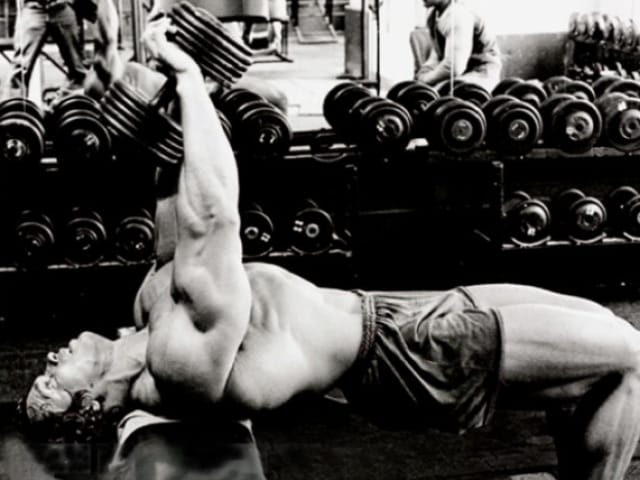
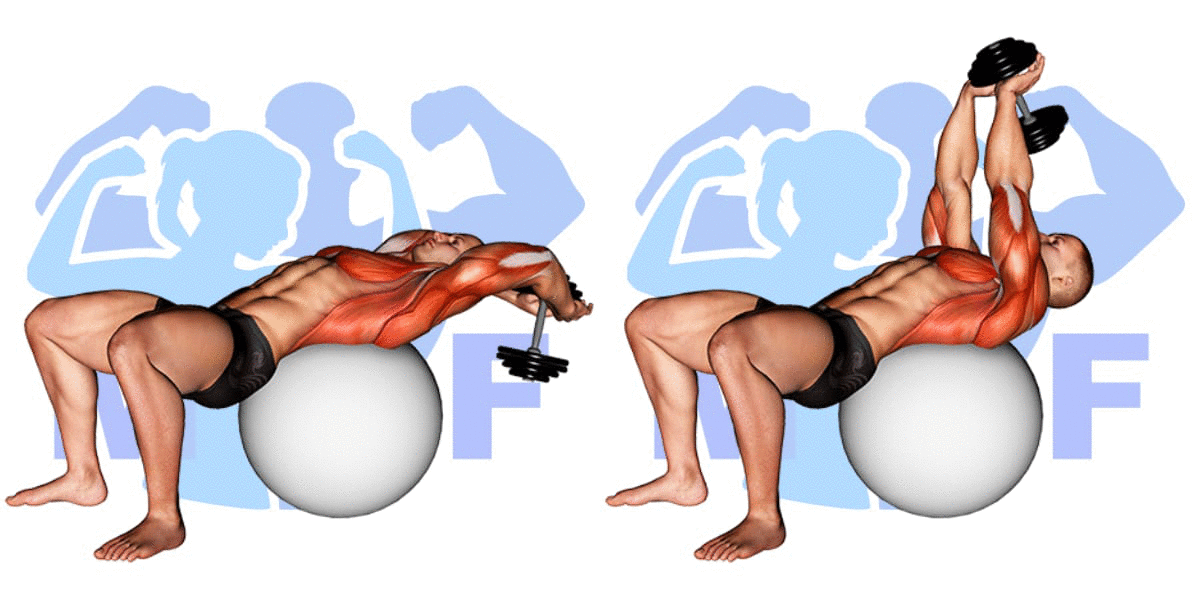
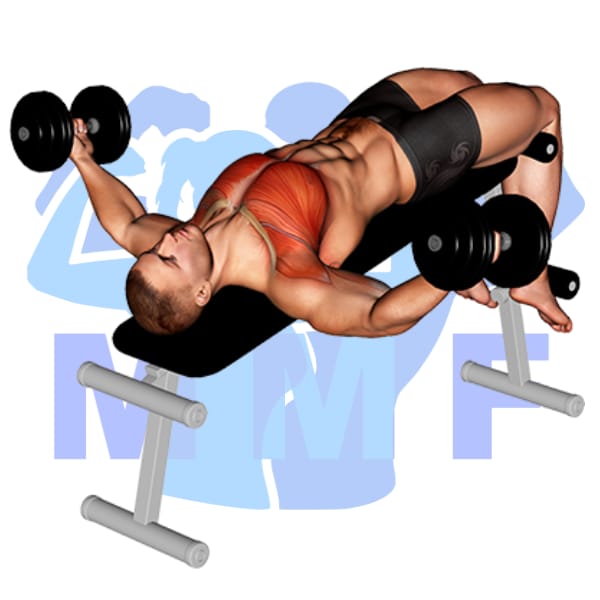
- Lay with your back on a bench or exercise ball. You can lay across the bench like Arnold in the picture above or you can lay along the bench with your head hanging off the end.
- Hold the dumbbell in your hands with your thumbs and your fingers of each hand together.
- Begin with the dumbbell pressed up straight above your chest.
- Keep elbows in at all times. To work your chest keep your elbows in, to work your lats push your elbows out to the side slightly.
- Next, lower the dumbbell over your head and just past your ears towards the floor. Don’t lower the weight by bending your elbows or this will work your triceps more.
- Then pull the dumbbell back up over your head to above your chest using the same path.
- Your best breathing technic is to breathe in on the way down and out on the way up.
- Repeat the pullovers for your desired reps.
Scott Herman On Working Your Lats or Chest with Dumbbell Pullovers
Scott Herman breaks down the difference in how to target your chest and how to target your lats with dumbbell pullovers in this video.

Muscles Worked In Performing Dumbbell Pullovers
Target (Agonist) Muscles
- Pectoralis Major
- or
- Latissimus Dorsi
Synergist Muscles
- Sternal
- Teres Major
- Deltoid, Posterior
- Rhomboids
- Levator Scapulae
- Pectoralis Minor
Stabilizers Muscles
- Deltoid, Anterior
- Pectoralis, Major, Clavicular
- Triceps Brachii
- Wrist Flexors
Antagonist Stabilizers
- Rhomboids
- Teres Major
Your Do’s and Don’ts Tips for Dumbbell Pullovers
This video has tips from Jeff Cavaliere on performing dumbbell pullovers.
The three main takeaways that Jeff brings up are:
- Don’t lower the dumbbell below your head to work your chest.
- Squeeze your hands together at the top to increase effectiveness as a chest exercise.
- Don’t pull the dumbbell forward beyond your chest.
A Few More Tips to Maximize Exercise Effectiveness
- Stretch your shoulders before you start this exercise.
- Begin with a light dumbbell. It is important to start with a lightweight to practice good form and control and save your skull.
- Remember to keep your elbows in to work your Pectoralis Major and flare your elbows out slightly to work you Latissimus Dorsi.
- Keep your feet flat on the floor. Lifting your feet can lead to lower back injury or strain.
Additional Cautions When Performing Dumbbell Pullovers
- If you have any shoulder problems, you may want to avoid the dumbbell pullover altogether, until you see a doctor.
- When you feel or have any shoulder pain while performing dumbbell pullover stop.
- If you only have pain when you lower the dumbbell at the bottom of the range of motion, stop before the point where you first started feeling the pain.
Other Common Errors While Performing the Dumbbell Pullover
- Don’t use to much weight, a common mistake for many novice lifters is having to arch your back to pull the weight up. If you find you have to bend your arm to bring the dumbbell close to you, then you are using to much weight.
- Don’t raise your hips. When you raise your hip you are using your body to throw the weight up and that takes the focus off your chest.
- Don’t lift your feet off the ground. When you lift your feet you put the weight of your body and the dumbbell on your back. Additionally, if you try to lift your feet when using a stability ball, you will likely slide off.
- Don’t Jerk the weight up. Jerking the weight will cause you to lose proper form and lead to injury. Subsequently, jerking also takes the resistance off your muscles and will reduce the effectiveness of the pullovers.
- Don’t perform the movement too fast. You are not working on explosive power with dumbbell pullovers. When you perform the movement faster it will require more effort for your antagonist to slow the momentum and less work on the primary muscles.
- Don’t Lett your elbows flare out too far when working your lats. If your elbows are out too far out you can lose control of the dumbbell and cause possible shoulder injury.
Variations of the Weighted Pullover
These variations are intended to work different subgroups of muscles or work the same muscles in slightly different ways. You can make multiple variations by adjusting the type of weight (dumbbell, barbell, plate or kettlebell) or change your base (bench, stability ball or chair).


Additional Exercises to Compliment the Dumbbell Pullover For Your Chest

Additional Exercises to Compliment the Dumbbell Pullover For Your Lats


Add Dumbbell Pullovers to Your Chest Day, Lat Day or Both
The Dumbbell Pullover is a great exercise for hitting your pectorals at a different angle or strengthing your lats. The weight that you will use for chest pullovers and lat pullovers may be different. You can mix up chest and lat dumbbell pulldowns into the same routine. One way to work both muscle groups is to do some reps for your lat and for your chest in the same set. Or you can alternate sets for your lats and some for your chest.
Do you do pullovers in your weightlifting routine? Or are you going to add it to your chest or back day?
Like This Article Pin This Image